ABOUT THIS BLOG

"A Faithful Attempt" is designed to showcase a variety of K-12 art lessons, the work of my art students, as well as other art-related topics. Projects shown are my take on other art teacher's lessons, lessons found in books or else designed by myself.
Thanks for visiting!
LAND ACKNOWLEDGEMENT I acknowledge, with deep respect, that I am gathered on Treaty 7 territory. I acknowledge the many First Nations, Métis and Inuit whose footsteps have marked these lands for generations. I respect the histories, languages and cultures of all the Indigenous peoples of Canada, whose presence continues to enrich our community.
Showing posts with label Indigenous Art. Show all posts

Friday, October 3, 2025

Indigenous Artist Benjamin Chee Chee: Canada Goose Art Project


Truth and Reconciliation Day, observed on September 30, is a day for Canadians to reflect on the history and lasting impacts of the residential school system on Indigenous Peoples. In schools, it is often marked with learning activities that emphasize the importance of listening to survivors’ stories, acknowledging past harms, and committing to building respectful relationships between Indigenous and non-Indigenous communities. Students may wear orange shirts to honour survivors and those who never returned. The day focuses on raising awareness, fostering empathy, and encouraging ongoing action toward reconciliation.

In my Grade 10 homeroom, we explored the work of Benjamin Chee Chee, an Ojibwe artist from Temagami, Ontario, known for his graceful line drawings of birds and animals that reflect his connection to nature. After learning about his life and contributions to Canadian art, students tried to recreate one of his elegant Canada goose pieces using Sharpies and pencil crayons, which gave them a hands-on way to appreciate his style and artistic voice.

Looking at his work, I was mesmerized by the simplicity, the gracefulness and flow. 

I was inspired by THIS lesson on the Runde's Room website. 


Grade 10 students used their laptops to look up images of Chee Chee's work. They copied one of his geese onto cardstock in pencil. Then they traced over the lines with sharpies. 


Some finished artworks- my kids really enjoyed this project, even the 'non-artists' were really happy with their drawings!


Thursday, June 12, 2025

Indigenous Plains People Painted Buffalo Hides


In Canada, June is designated as National Indigenous History Month, a time to celebrate and recognize the rich history, heritage, and contributions of First Nations, Inuit, and Métis peoples. Additionally, June 21st is recognized as National Indigenous Peoples Day, a specific day to highlight Indigenous cultures and achievements. 

Why do non-Indigenous Canadians need to learn about Indigenous history?

For many Canadians, the history of Indigenous Peoples and Canada was, until recently, unknown. Generations of Canadians have gone through their lives without knowing about residential schools, the historic and ongoing impacts of the Indian Act, the significance of treaties, or the contributions of Indigenous Peoples to the mosaic of Canada. 

Canada is often recognized as a leader in reconciliation efforts with Indigenous peoples, due to its commitment to recognizing Indigenous rights, addressing historical injustices, and engaging in nation-to-nation relationships. While significant progress has been made, the journey towards reconciliation is ongoing and faces ongoing challenges. 

So in art class, my Grade 4-6 students learned about and made their own versions of painted buffalo hides of the Plains Peoples. We looked at photos and watched videos. 


You can find many buffalo hide templates online. We painted them with brown liquid watercolours first and let dry. Then they sketched on their designs using pencils. Once students finished drawing and colouring their designs using pencil crayons, they cut them out and glued them onto brown construction paper. 


Monday, June 17, 2024

Métis Dot Painting


Every June, the Government of Canada honours the histories, achievements and resilience of First Nations, Inuit and Métis peoples, who have cared for this land since time immemorial.

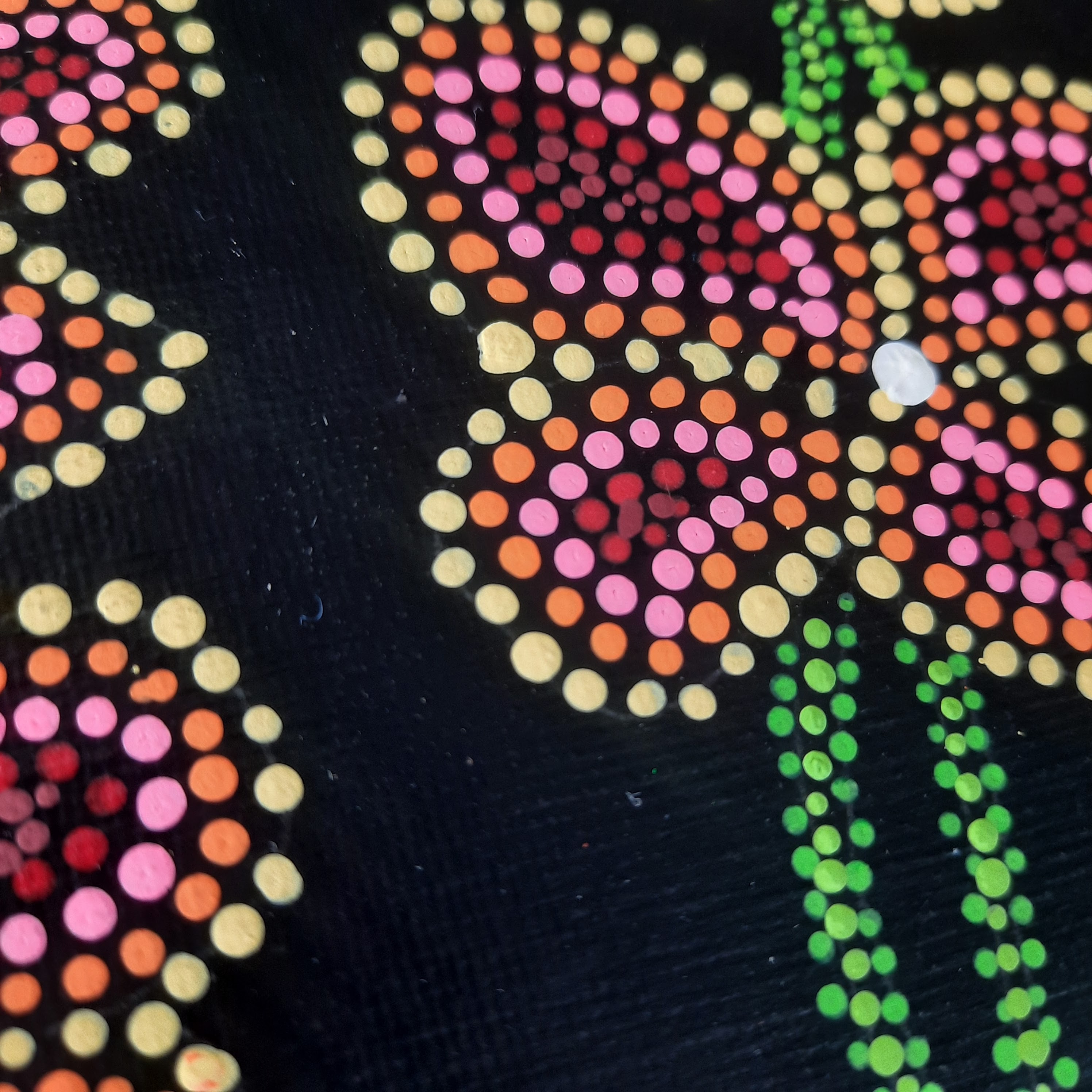
I decided to do a Métis dot painting lesson with my Grade 7-9 students. Dot art is a contemporary art form inspired by Métis beadwork where beads are replaced with small dots of colourful paint. 

One of my colleagues is Métis, so I asked her if she would be willing to do a presentation about her culture. She is very artistic and sews her own ribbon skirts as well as makes her own beading. She brought in some samples to share with the students and showed a beautiful presentation on the TV.


The term Métis refers to a collective of cultures and ethnic identities that resulted from unions between Aboriginal and European people in what is now Canada. In Canada, the Métis, with a population of 624,220 as of 2021, are one of three major groups of Indigenous peoples that were legally recognized in the Constitution Act of 1982, the other two groups being the First Nations and Inuit.

My province, Alberta, is the only Canadian province with a recognized Métis land base: the eight Métis settlements, with a population of approximately 5,000 people on 1.25 million acres and the newer Metis lands near Fort McKay, purchased from the Government of Alberta in 2017.

Our local IKEA had a great display on right now which explains some Metis history. 


The Métis people became famous for their floral beadwork designs that were sewn onto clothing, moccasins, and other everyday objects. The Red River Métis are known for their prairie beadwork featuring colourful floral designs used to represent prairie wildflowers such as the prairie rose, wild strawberry, blue eyed grass, western red lily, and more. The popularity of floral beadwork designs on their clothing and leathers gave way to the Métis being referred to as the "Flower Beadwork People” by the Dakota and the Cree.

My Grade 7-9 students started off this lesson by looking at images of traditional beadwork:


Then, for a contemporary spin, they looked at the giant Métis dot paintings by Canadian artist and activist Christi Belcourt Christi Belcourt. She takes inspiration from traditional Métis beadwork and creates large-scale paintings done entirely in dots, simulating thousands of beads. Her paintings create a link between the past and the present by transforming traditional Métis beadwork into contemporary paintings while still believing that “all life, even the rocks, needs to be treated with respect”. As a Métis visual artist with a deep respect for the traditions and knowledge of her people, the majority of her work explores and celebrates the beauty of the natural world.


So to start off, I bought a bunch of small canvas boards (from Dollarama) in slightly different sizes.
Most were about 4 x 7". I primed them all with black acrylic paint (2 coats).


I ordered dotting tools from Amazon and numbered each one, so students would choose the same one each class.


I also had handouts of patterns available. 


Students chose their canvas size, then traced it onto scrap paper. 
They drew their design within the shape.


Then they covered the back with graphite.


And then you transfer the drawing onto the black canvas using a ball point pen.


Students can use the drawing sheet to plan out colours.


Then students choose their colours and pour out small amounts of acrylic paint. They practice dotting first on scraps of black paper, in order to get the hang of it. This is an important step!!


I will say that my students really enjoyed this project!  It takes a lot of patience and concentration, and I was proud of how well they did. The staff at my school were astounded by the finished artworks. 


Related Posts Plugin for WordPress, Blogger...