ABOUT THIS BLOG

"A Faithful Attempt" is designed to showcase a variety of K-12 art lessons, the work of my art students, as well as other art-related topics. Projects shown are my take on other art teacher's lessons, lessons found in books or else designed by myself.
Thanks for visiting!
LAND ACKNOWLEDGEMENT I acknowledge, with deep respect, that I am gathered on Treaty 7 territory. I acknowledge the many First Nations, Métis and Inuit whose footsteps have marked these lands for generations. I respect the histories, languages and cultures of all the Indigenous peoples of Canada, whose presence continues to enrich our community.

Saturday, April 8, 2023

Pirate Treasure Maps


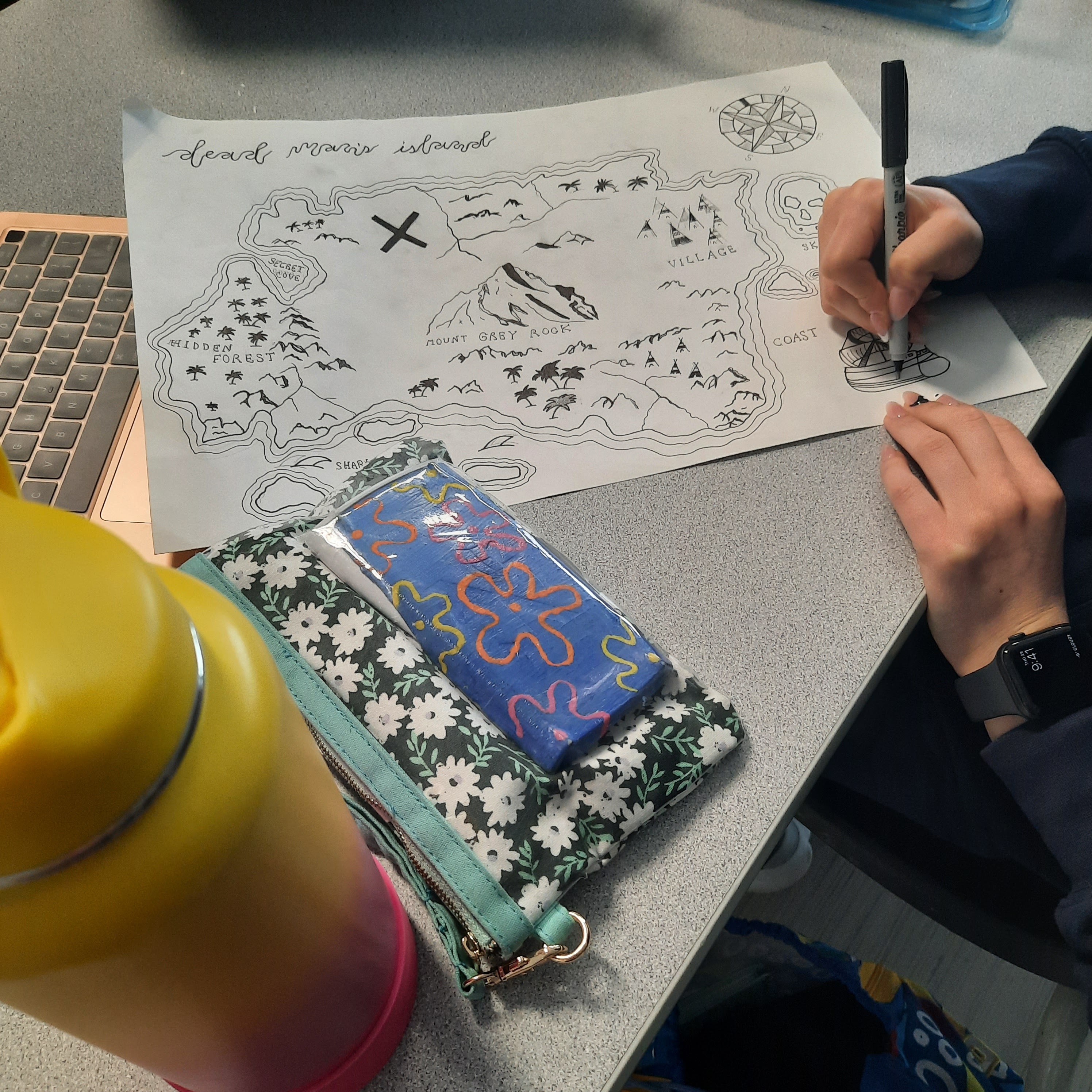
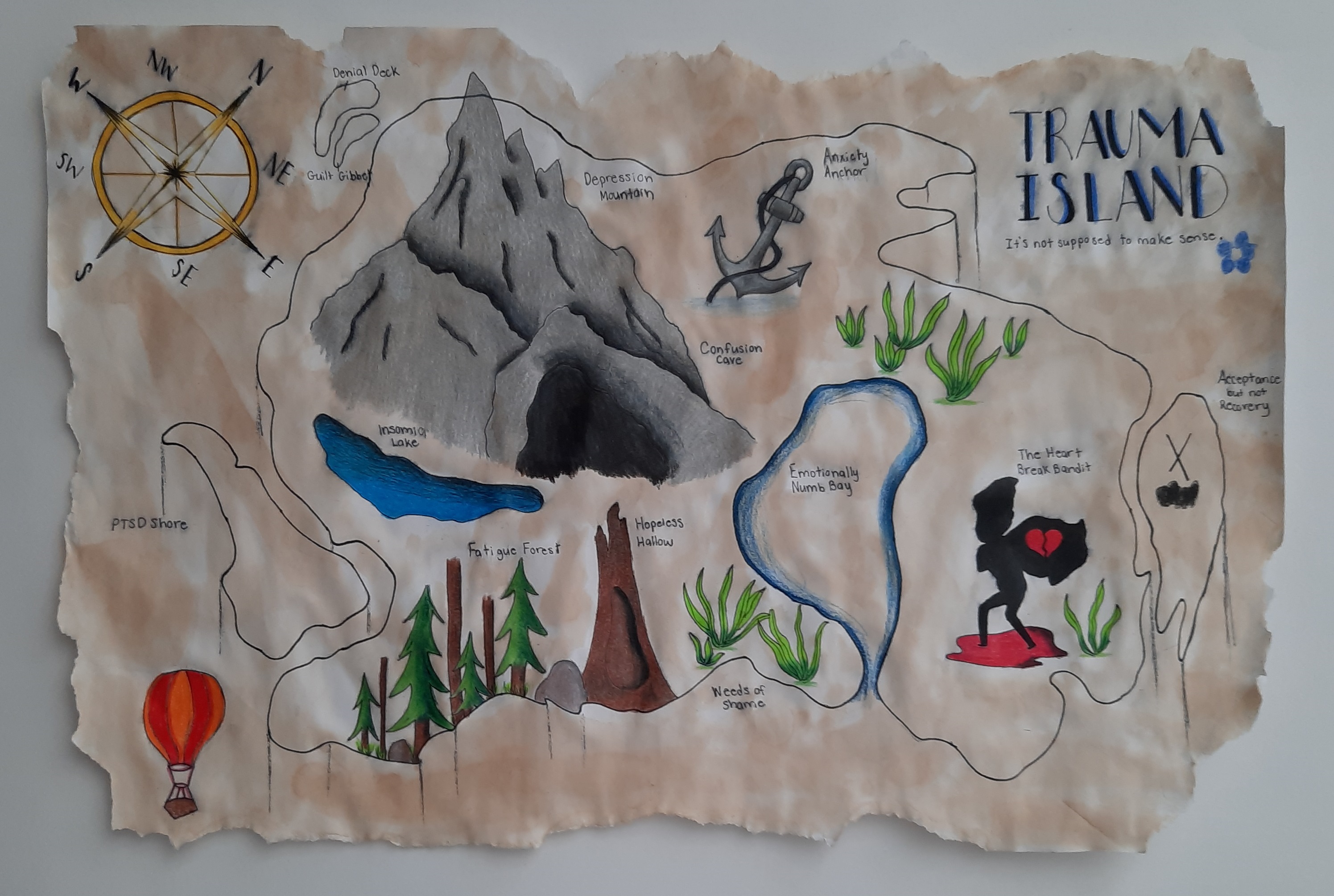
Grade 7-9 students made these detailed treasure maps.

I saw this lesson on a Canadian arts & crafts TV show, "Art Zooka", early one morning when I was home sick from work!
 

First they sketched a plan. They were encouraged to include a compass rose, a pirate ship, a Jolly Roger flag, a path and 'X' for the treasure and a scroll with some sort of title. Many kids thought up a theme for their map. They had to also think of unusual names for all the features/obstacles on the island.

Then they drew a good copy on thin white drawing paper and outlined it all in fine tip permanent marker.


 Then colored it with pencil crayons- I encouraged them to press hard and use
shading and value changes for extra realism...


Finally, they cut the edges unevenly, some tore them and then we tea (regular black tea bags) stained them all and crumpled them up to make them look two hundred years old.


Some finished maps- I love all the detail in these!!  Click on each one to view it up close.


Tuesday, April 4, 2023

Easter & Spring Wycinanki Papercuts


Grade 4-6 students created intricate cut paper wycinanki (pronounced Vee-chee-non-kee) incorporating an Easter or Spring theme. Wycinanki is a traditional paper-cutting craft from Poland, but it is also practised all over Eastern Europe. It dates from the mid-19th century where it was first made by shepherds who used their huge shearing scissors (as it was the only tools they had available) to create intricate patterns out of leather for decoration. A somewhat similar craft, scherenschnitte, is practised in Germany and Switzerland. 

Students simply folded a piece of photocopy paper (needs to be thin paper in order to cut easily) in half and drew half of a design. They could include objects like trees, chicks, bunnies, tulips, spring flowers, grass, etc. Cut carefully, unfold and voila, a delicate symmetrical design. They were carefully glued onto colored pastel paper.


Saturday, April 1, 2023

Viking Longship Watercolour Paintings


This is a wonderful drawing and watercolour lesson that I enjoy teaching. 
These were completed by Grade 7-9 students. 
I've posted about this lesson previously HERE and HERE.
I recommend using watercolour paper for best results. 

Students started with 9x12" watercolour paper. They all have laptops, so were able to research and look up photos of Viking longships independently. 

The Viking longship was, without a doubt, an utterly awesome vessel. In their longships, Vikings sailed to all sorts of far off places; like Greenland, Constantinople, and even as far as America. These were some mighty tough and durable ships then, each one capable of braving treacherous seas, facing terrifying storms, and overcoming deadly currents. Amazingly, the entire longship could be constructed with no other tool than an axe

We discussed the features of the ships including:  a sail and a mast, but they also had oars for rowing in case the wind disappeared. To steer the boat, they just had one oar at the back of the ship. Another fantastic feature was that the longboat was symmetrical and double-ended. This meant that the Vikings could reverse without having to turn the boat around. On board were a series of small rowing boats which meant that the Vikings could get to shore and explore without risking damage to the bigger ship. They were all made from planks of timber, usually oak, overlapped and nailed together. The ships were made watertight by filling the spaces between the planks with wool, moss or animal hair, mixed with tar or tallow. The ships were all the same long narrow shape, with shallow draughts. The prow (at the front of the ship) was often decorated with a skillfully carved dragon or snake head to make people fearful. Each ship had a big, brightly coloured square sail which was woven from wool. They were dyed red and had stripes or diamond patterns.


So students spent one class drawing their ship in pencil.


The next class, they outlined their ships using ultra fine tip Sharpies. Then they painted it all using watercolour. They used the wet-on-wet technique to paint the sky and water. 


Some of the finished longships:


Monday, March 27, 2023

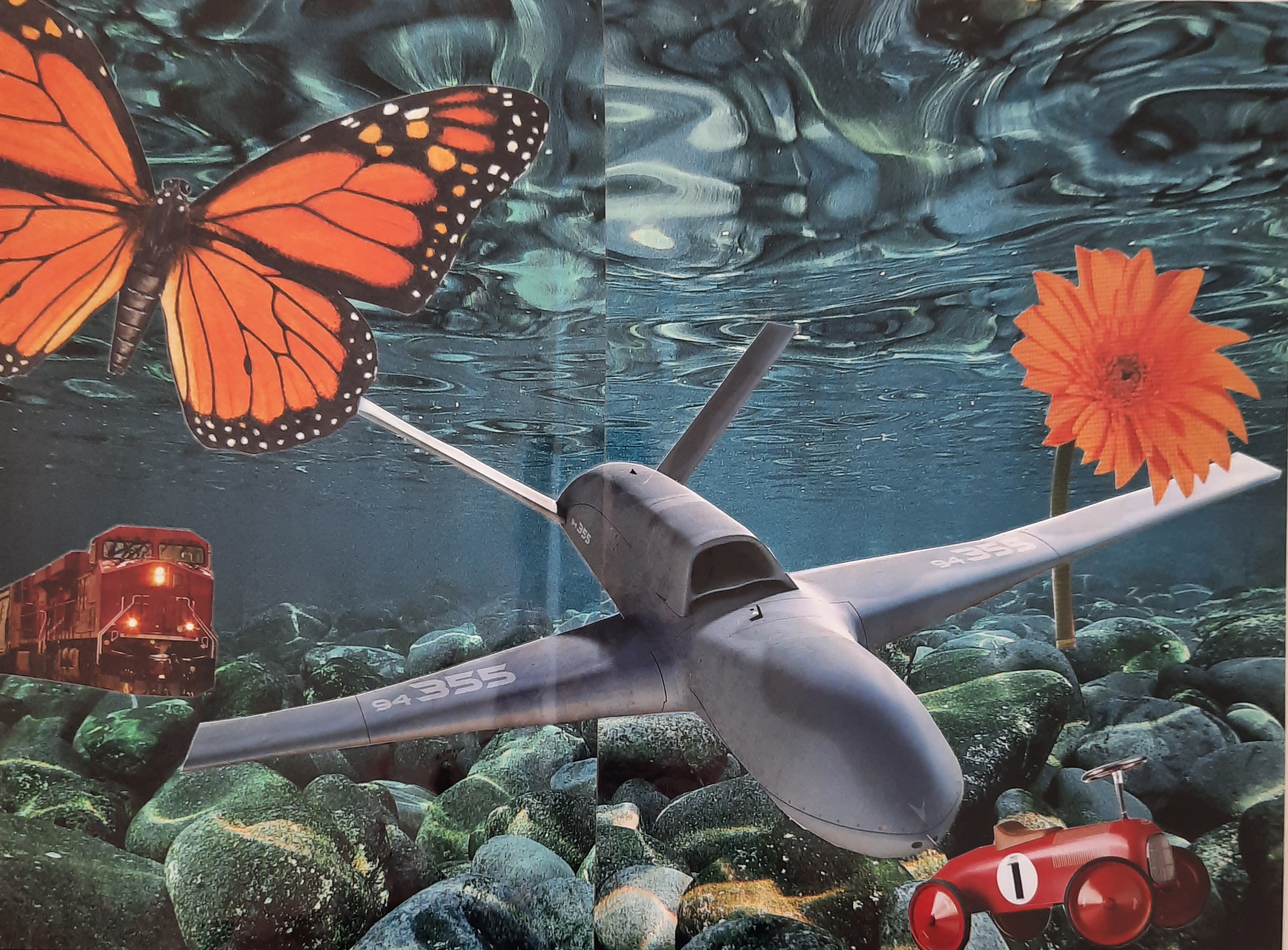
Surrealism Style Magazine Collage


Grade 10- 12 students looked at the work of Surrealist master Salvador Dali. They noticed the high realism of his work, the sense of space and distance and the juxtaposition of random objects in one picture plane. 

Salvador Dali, "The Persistence of Memory", 1931

Students started off by looking through my stash of magazines (why does every art teacher have a huge cache of National Geographics, lol). They were to rip out any page that had an interesting image or cool texture or something that would make a good background. 

Once they had collected a fair number of images, they had to carefully and precisely cut out each image and then re-arrange them on their background landscape, creating a pleasing composition. I encouraged them to try and tell a weird story, but not to clutter the composition with too many images.


Some finished collages:
(there were some really weird ones and some humorous parts!!)


Related Posts Plugin for WordPress, Blogger...